Air Sealing Services in Fernley NV - Gaps Closed Before Any Insulation Goes In
Drafty rooms, dust under the attic or a power bill that keeps climbing? We find the leaks and close them so your house holds heat.
Have us find your home's air leaks
Call (775) 980-1020 or send the form, because most leaks hide in the attic where you can't see them from the rooms below.
Does my house need air sealing, or just more insulation?
Air sealing services in Fernley close the gaps, cracks and seams between your living space and the attic, crawl space and walls, so the air you pay to heat or cool stays inside. It's one of the most cost-effective things you can do for a house, and it cuts drafts and keeps out moisture, dust, pollen and pests.
Most calls start with a drafty room, a hot upstairs or a power bill that won't come down, and the fix usually isn't more insulation, because air moves right past it through the gaps. The price turns on how many leaks there are, how big they are, how hard your attic is to get into and whether anything up there has to be fixed before we seal. The schedule turns on those same repairs and on a permit if the job needs one, which we pull. Your written estimate puts all of that in order for your house.
Why Fernley homeowners call M&T Fernley Spray Foam Insulation for air sealing
The owner writes your estimate
I look at your house and write the estimate myself, and our own installers do the work. I check the job before it's finished, so the person who quoted it signs off.
Straight answers since 2017
In business since 2017, we're based in Fernley and work in Silver Springs, Sparks, Reno, Fallon, Dayton and nearby cities. Ask us whether a job can wait, and we'll tell you straight.
We're licensed and insured
Nevada usually licenses contractors by classification, and each one sets what kind of work that contractor can take on. When you're comparing bids, it's fair to ask every contractor what their license covers.
What matters most on air sealing is doing the steps in the right order. Get in touch or call (775) 980-1020, and I'll come look at what your house really needs.
What our air sealing services include
Air sealing comes before any insulation, so we start by looking for anything that has to be fixed first, such as wet insulation, moldy or rotted framing, a fan or vent dumping damp air into the attic, little or no ventilation, or old knob and tube wiring, which can be a fire hazard near insulation. Then we go after the leaks around pipes, wiring, flues and light fixtures, using caulk or foam on narrow gaps and rigid blocking sealed in place over bigger openings, not more insulation. Soffit, ridge and gable vents and any combustion air duct stay open, because they only work if air can move through them. If you have a gas furnace or water heater, we have its venting checked as part of the plan.
Once the gaps are closed, most attics do fine with a top-up of loose fill, and that usually beats paying for foam. Where ducts run through the attic or a space has to block moisture too, closed-cell foam insulation, a dense foam that seals and insulates in one pass, can earn its higher price. Leaks don't stop at the attic either, so if cold floors start downstairs, we can seal the rim joist and follow with basement insulation.
Sealing and leaving good insulation
Suits a house whose insulation is still dry, even and deep enough, because the drafts are coming through gaps and not through thin coverage. We close the leaks and leave what's working where it is.
Sealing with spray foam
Suits an attic where the ductwork runs, or a space that needs a moisture block, because foam seals and insulates at once. It costs more, so we only suggest it where it pays off.
How do you know your house is leaking air?
Drafts at outlets and trim
You feel cold air at outlets, baseboards or around the attic hatch, which usually means air is moving through gaps behind the wall. Left alone, the furnace keeps making up for it all winter.
The room over the garage
One room, often upstairs or over the garage, never matches the thermostat. That usually points to leaks into the attic or garage, and more insulation won't fix it until the gaps are closed.
Dust in rooms below
Dust that keeps settling in rooms right under the attic usually means attic air, with its dust and pollen, is getting pulled inside. Until it's sealed, you're cleaning the same rooms every week.
A power bill that climbs
Heating and cooling bills keep going up even though nothing changed in how you use the house. Air slipping out through gaps is a common reason, and you pay for it every month.
What happens when you call us about air sealing in Fernley?
I come out and look
I come out myself, look over the attic and tell you on the spot what I see. Your written estimate says what comes first and what can wait.
Our installers seal the gaps
Our own installers do the sealing, in the order the estimate lays out. If the job needs a permit, we pull it and set up the inspections.
I check it before we finish
I check the work myself before we call it finished. I'll show you what we sealed and point out anything that can wait for later.
Air sealing questions from Fernley homeowners
Here's what people ask most before they book air sealing. If your house has something these don't cover, call (775) 980-1020 and ask about your own job.
How much does air sealing cost in Fernley?
Air sealing with caulk, spray foam and weatherstripping around windows, doors, pipes and wiring usually costs about $500 to $1,500 per job across the US, so treat that as a national figure, not a Fernley quote. Attic jobs that need complex work, testing, new insulation or repairs can add a good deal to it. You may also qualify for help with air sealing and insulating through Nevada's Weatherization Assistance Program.
How do I know if my house needs air sealing?
The signs above are the usual ones, along with dry air inside all winter, and any of them makes your house a good candidate. Start with the rooms right under the attic, because dust there usually points to where the leaks are.
Do I need a blower door test before air sealing?
A blower door test, which measures how airtight your house is, is the first step on a federal air sealing checklist, because it sets a target for what the job should reach. Ask about testing when you book, and we'll talk through what makes sense for your house.
Is air sealing safe if I have a gas furnace or water heater?
It is when the venting gets checked, because a tighter house can sometimes cause a naturally venting appliance to back-draft exhaust gases into your home. Federal guidance suggests homes with gas or oil appliances have them tested for proper drafting before and after sealing, which is why that check is part of our plan.
How long does air sealing take, and can we stay home while it's done?
You can usually stay home while we seal with caulk, canned foam and blocking, and how long we're up there comes down to how many leaks there are and how easy the attic is to reach. Mention a tight attic or a hatch inside a closet when you book. If the job calls for spray foam, we'll tell you the re-entry time, which is when kids and pets can come back in, before we start.
Who handles building permits for air sealing in Fernley?
Fernley's Building Department & Code Enforcement issues building permits in the city, and you can call it at 775-784-9900. Its permits cover construction, remodels and similar work, and that list doesn't name air sealing, so ask the city whether your job needs one. If it does, we take care of it.
Get an air sealing estimate for your house
Tell us what you've noticed, how you get into the attic and whether you have a gas furnace or water heater. We reply within one business day to set up a free on-site estimate, with no obligation.
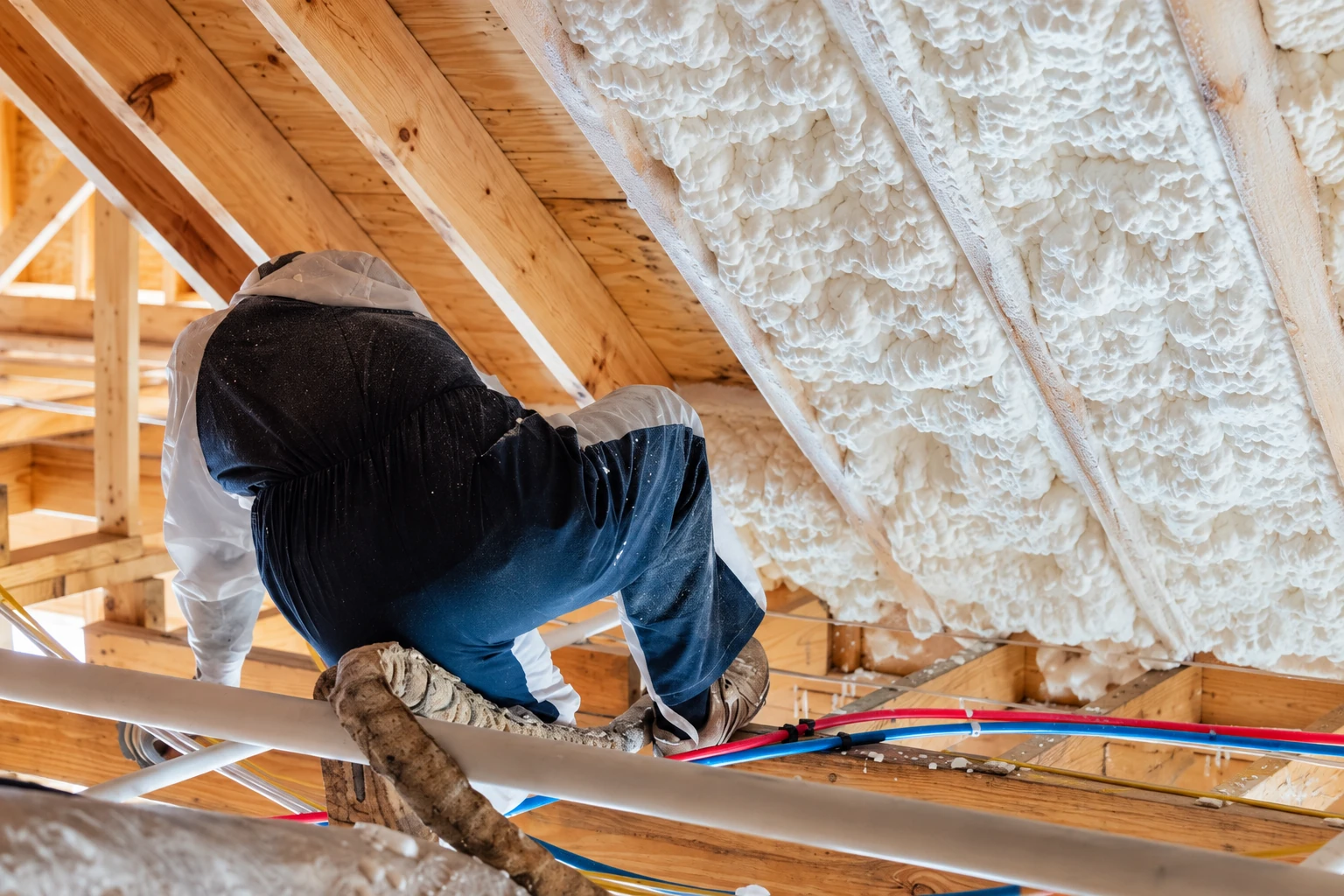
Air sealing work up close
Work that often goes with sealing
Basement insulation
If floors stay cold after the attic is sealed, insulating the basement walls and rim joist warms the lower level and closes another path for outside air.
Learn moreClosed-cell foam insulation
When ducts run through the attic or a space needs a moisture block, closed-cell foam seals and insulates at once, for a higher price that can pay off.
Learn more