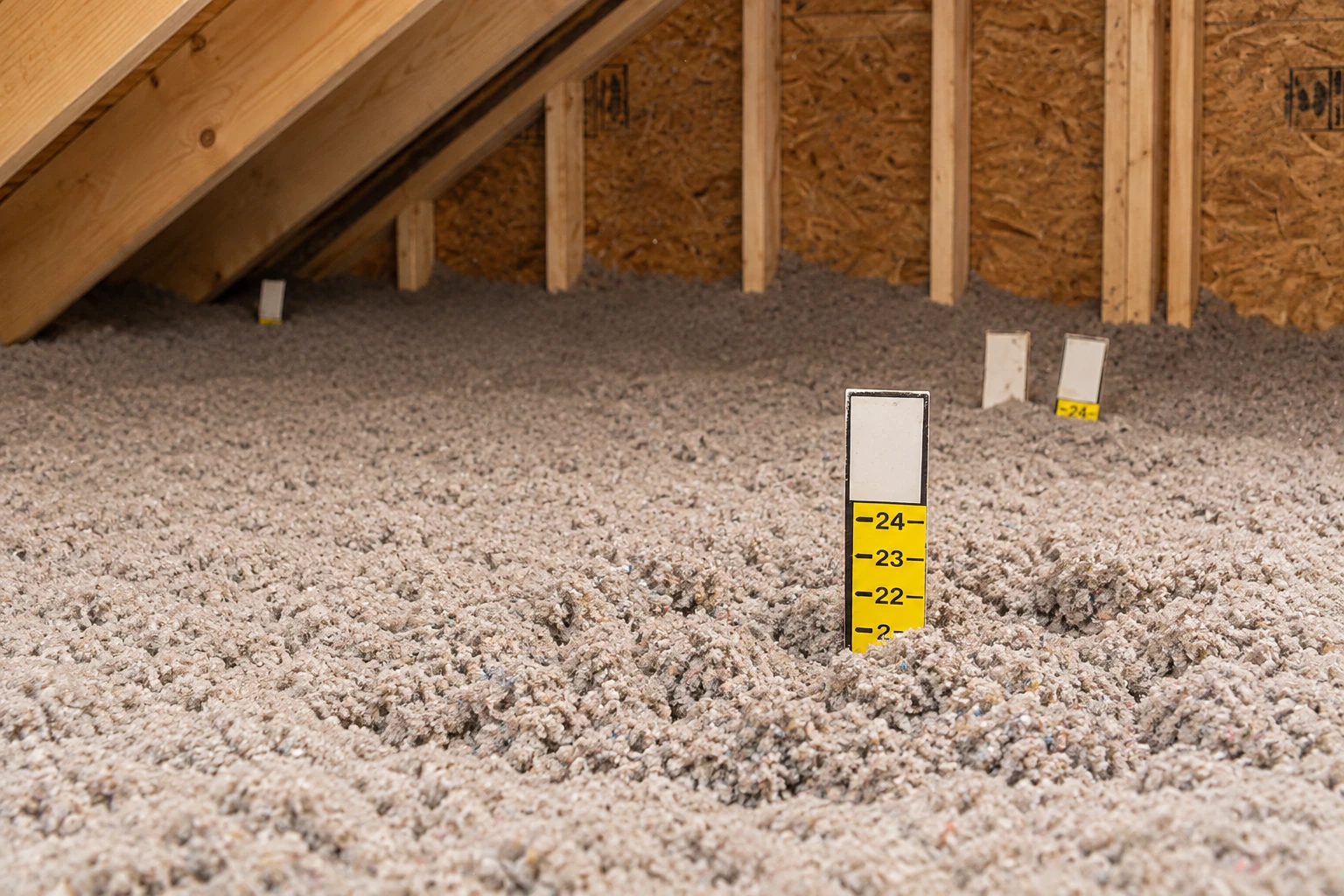
Attic insulation in Fernley NV - a sealed attic with even coverage to the edges
Hot rooms upstairs and a power bill that keeps climbing usually trace back to the attic. We seal the gaps and fill it evenly.
Have us take a look in your attic
We pick up seven days a week from 8 AM to 9 PM, so call (775) 980-1020 or use the form whenever it suits you.
Does your Fernley attic need more insulation?
Attic insulation in Fernley is the layer of loose fill or batts on your attic floor that slows heat moving between your rooms and the roof. M&T Fernley Spray Foam Insulation seals the gaps under it and tops it up so the house stays cooler in summer and warmer in winter.
Most calls start with a hot room upstairs, cold floors over the garage or a power bill that won't come down. The price turns on how big the attic is, how many inches are up there now, how many gaps need sealing and whether old material has to come out, and that last part sets the schedule too, since insulation removal comes before anything new goes in. House age matters because older houses usually have more settled fill and more open gaps. Your written estimate says what has to be fixed first and what can wait. We're based in Fernley and work across the cities around it, and you can reach us at (775) 980-1020.
Why Fernley homeowners call M&T Fernley Spray Foam Insulation for their attics
The owner looks at your attic
I come out myself to look at the attic and tell you on the spot what I see. You hear it from the person who answers for the work, not a salesperson.
Roofer first, in business since 2017
I spent years on roofing crews and have run this business since 2017. Under those roofs I kept finding crushed insulation and open gaps, so I know where to look in yours.
Licensed, insured and easy to check
We're licensed and insured for attic work. In Fernley, a contractor applying for a permit also needs a city business license, so ask anyone you're comparing about both.
On an attic, the order matters most, because insulation laid over a leak or an unsealed gap is money wasted. I'd rather tell you a job can wait than sell you one you don't need, so ask for an estimate and I'll tell you what yours needs first.
How we handle attic insulation
We start by checking what's already up there, how many inches and whether any of it is wet, dirty or crushed, because bad material has to come out before new material goes in. Then we do the air sealing, closing the gaps around can lights, pipes, wires and the hatch, so the new layer isn't fighting a draft. We put chutes in at the eaves so the vents stay clear and the attic can breathe, and we keep insulation back from recessed lights, flues and fan motors. I'll show you how we guard each spot before we start. Last, we fill the attic evenly, with full depth out at the edges instead of a pile in the middle.
Most of our attic jobs end with blown-in insulation over the sealed floor. When the cold floors or drafts point past the attic, we look at the rest of your home insulation, from the walls down to the crawl space, so you know where the heat is really going.
Sealing plus a blown-in top-up
This suits most attics where the old layer is dry and the ducts run below the ceiling. We seal the gaps, then add blown-in fill, loose material sent through a hose, and it's what I'd pick for most houses because it does the job without the cost of foam.
Spray foam when ducts are up there
If your ductwork runs through the attic, foam at the roofline brings those ducts inside the insulated space. Foam costs more, but it seals air while it insulates, so in that attic it's usually worth the extra.
How can you tell your attic insulation isn't doing its job?
Hot rooms upstairs
The bedrooms upstairs stay hot long after sundown. That usually means thin insulation or open gaps above them, and every summer you wait, the AC runs longer to keep up.
A power bill that creeps up
Your bill keeps rising while your habits haven't changed. Heat is usually moving through the attic, and you pay for it every month until it's sealed and covered.
Joists showing through
You lift the hatch and see the tops of the joists or bare spots near the edges. Settled or crushed insulation does little, and those thin spots get colder every winter.
Stains or droppings up there
Water marks on the wood or droppings in the fill mean the old layer may be soaked or dirty. Covering it only hides the problem while the damage keeps going underneath.
What happens after you call about your attic in Fernley?
Call and I look in person
I come out myself, look at the attic and tell you what I see. Your written estimate says what has to be fixed first and what can wait.
Our installers do the work
Our own installers do the work, and if your job needs a permit, we handle it. With foam, you'll know beforehand when the kids and pets can come back in.
I check it before we finish
I check the job myself before we call it finished, from the chutes at the eaves to the depth along the edges. You're welcome to climb up and see it too.
Attic insulation questions we hear
These are the questions Fernley homeowners ask most before they let anyone into the attic. If yours isn't here, call (775) 980-1020 and ask about your own house.
How much does attic insulation cost near Fernley, NV?
Attic insulation in the Reno area usually costs about $1,500 to $4,900 per job, and that's the going rate across the area, not our quote. Where yours lands depends mostly on attic size, what's up there now and how much sealing it needs. Your written estimate shows what has to be fixed first and what can wait, and our work is satisfaction guaranteed.
Who answers permit questions in Fernley?
The City of Fernley Building Division answers questions on building permits, inspections and construction requirements at 775-784-9900 or building@cityoffernley.org. When a job needs a permit, we pull it and line up the inspections with the office that covers your address. If you're doing the work yourself on a home you live in, not one you're selling or renting out, you apply to the Nevada State Contractors Board for the owner exemption, and the city has owner-builder forms for your permit.
Is blown-in insulation better than batts for an attic?
For most attics, yes, because blown loose fill such as fiberglass, rock wool or cellulose usually costs less to install than batts and covers more evenly. Installed costs still vary from house to house, so it's worth asking what your attic's framing and access mean for the price.
Can my old attic insulation stay, or does it have to come out?
If it's dry and evenly spread, it can stay, and new insulation goes right on top. The new layer goes in without a vapor barrier, since one would trap moisture in the old layer, and batts can go over loose fill or loose fill over batts. Wet or dirty material comes out first.
What causes a hot upstairs even when the attic has insulation?
Usually it's air leaking through gaps the insulation can't stop, at the tops of interior and exterior walls and around pipes, heating ducts, light fixtures and wires. Adding insulation saves little money or warmth until those passages between your rooms and the attic are sealed, which is why sealing comes first.
How do I find out if my old attic insulation has asbestos?
If it's vermiculite, have it tested before any work goes on, because vermiculite insulation may contain asbestos. We look at what's up there before anything else, and if we see vermiculite, testing comes first. Mention it when you call, along with your address and what you know about the insulation that's there now.
Get a written plan for your attic
Tell us your address, what's in the attic now and anything odd you've noticed, like stains or vermiculite. We'll reply within one business day to set up a free on-site estimate, with no obligation.
Examples of attic insulation
Other work your house may need
Blown-in insulation
If your attic just needs depth added over a dry layer, loose fill blown through a hose is usually the simplest, most even way to get it there.
Learn moreHome insulation
When the drafts aren't only upstairs, we look at the walls, floors and crawl space too, so the whole house holds heat instead of just the top.
Learn more