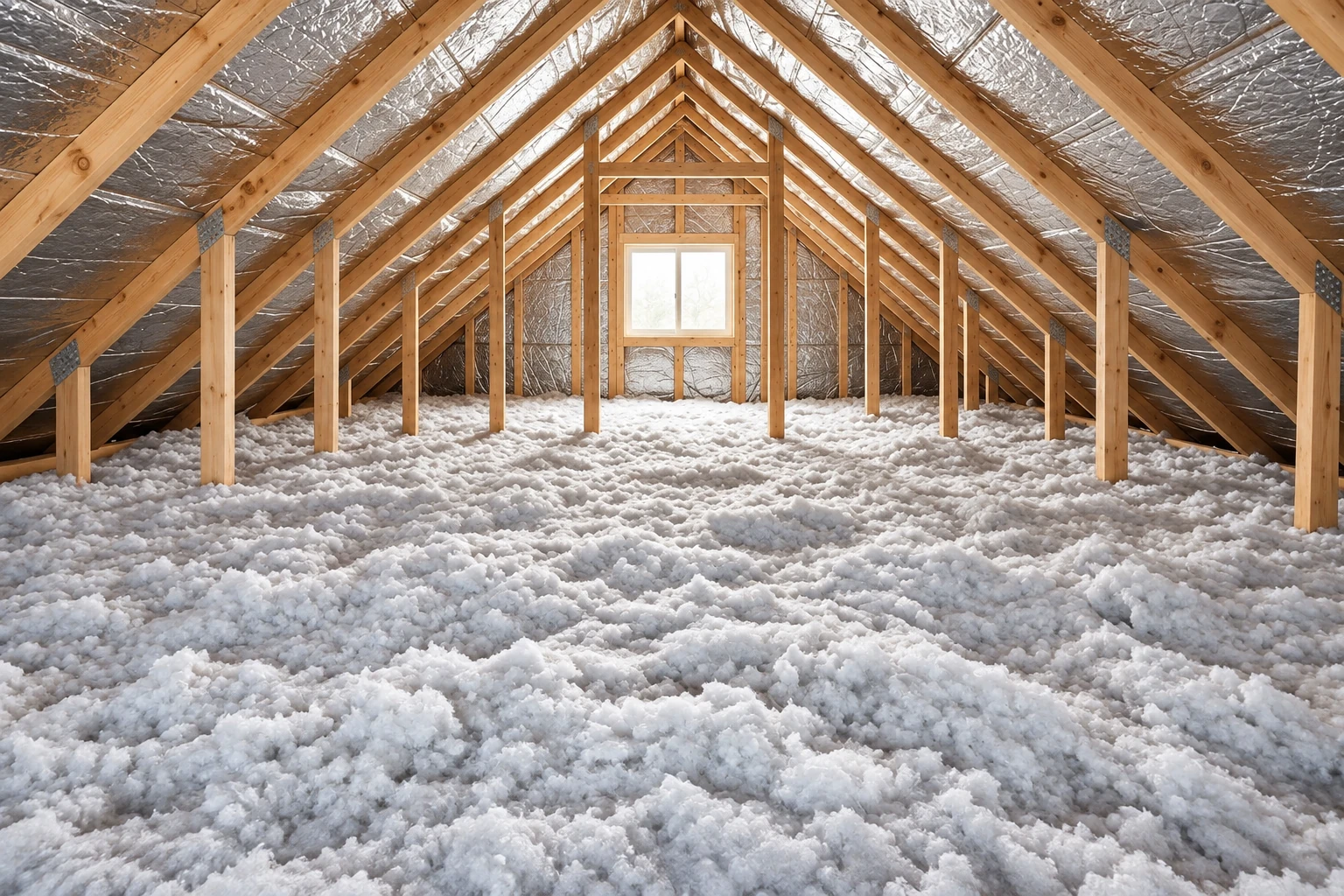
Blown-in insulation in Fernley NV - an even, dense layer across your whole attic
Hot upstairs rooms and a climbing power bill usually trace back to a thin attic. We blow in a dense, even layer that holds up.
Have us look at your attic first
Call (775) 980-1020 or use the form and tell us where your attic hatch is, since a tight hatch or a closet access changes how we plan the day.
Does your Fernley attic need blown-in insulation?
Blown-in insulation in Fernley is loose fill, usually fiberglass or cellulose, blown through a hose across your attic floor so it fills in around wires, pipes and odd framing that batts can't reach. Once the attic is ready, it's usually a quick job, and it brings a thin attic up to one even layer.
If the upstairs bakes all summer or the room over the garage never warms up, the attic is the first place I look. The price comes down to the size of your attic floor, how much is already up there, whether anything has to be fixed or pulled out first and how hard the attic is to get into. The schedule turns mostly on those same fixes, because a roof leak or a soaked layer that needs insulation removal has to be dealt with before we blow anything in. The estimate is where you get your own figure.
Why Fernley homeowners call us for blown-in insulation
The owner looks at your attic
I come out myself to look at your attic and write the estimate, then I check the installers' work before it's done. You hear what I see from the person who answers for the job.
Roofing background, in business since 2017
I spent years on roofing crews before insulation, so I look for roof leaks before we cover anything up. We've been in business since 2017.
Licensed and insured for your attic
We're licensed and insured. A licensed contractor pulling a City of Fernley permit also needs a city business license, so that's a fair thing to ask any crew you're comparing.
On a blown-in job, the order matters most. Fix and seal first, then insulate. Tell us about your attic and I'll come take a look.
How we do blown-in insulation
We start by checking how high the old layer sits against the attic joists, because that tells us whether a top-up is worth your money or whether it can wait. Then our crew does the air sealing, closing the gaps around can lights, pipes and the hatch, since loose fill on its own won't stop a draft pushing up through them. We blow the new layer dense so it holds up instead of settling into bare spots, and we carry it full depth out to the edges, where attics are most often thin. If you're weighing spray foam instead, it costs more and seals air while it insulates, but sealing the gaps and topping up with loose fill is usually the better buy unless your ductwork runs through the attic.
Blown-in is often one piece of a bigger plan. If the cold floors and drafts are coming from more than the attic, our home insulation work looks at the whole house, and when the old attic layer is spoiled, insulation removal clears it out before anything new goes in.
Fiberglass loose fill
Suits most attics where you want a light layer that adds little weight to the ceiling and doesn't soak up water easily. It takes a bit more depth to do the same job as cellulose.
Cellulose loose fill
Made from recycled paper treated to resist fire, it packs denser and tucks in well around wires and framing. It suits attics with a sound roof, because it holds water if a leak reaches it.
Blown-in in place of batts
Older federal guidance found that blowing loose fill usually costs less than laying batts and covers the attic floor better, though install costs vary. It suits attics full of wires, pipes and odd framing that batts have to be cut around.
How do you know your attic is due for more insulation?
Upstairs runs hot all summer
The bedrooms upstairs stay hot long after sundown while downstairs cools off. That usually means the attic is thin or leaking air, and every summer you wait the AC runs longer.
Cold room over the garage
The room over the garage feels cold and drafty in winter no matter where you set the heat. The insulation is usually thin there, and that keeps costing you every season.
Power bill keeps creeping up
Your power bill climbs year after year with no change in how you live. Insulation that has settled or never covered fully is a common cause, and the cost adds up monthly.
Bare or crushed spots up top
Through the hatch you see flattened insulation, bare spots or a layer that's deep in the middle and thin at the edges. Heat slips out through those spots, so the problem only grows.
What happens when you call about blown-in insulation in Fernley?
Call and get the attic checked
I come out to look at your attic and tell you on the spot what I see. Your written estimate shows what has to be fixed first and what can wait.
Our installers do the work
If your job needs a permit, we pull it and line up the inspections with the city or county office for your address. Our own installers handle the sealing and blowing.
I check it before we finish
Before we call it done, I go up and check the depth, the edges and the vents myself. You're welcome to climb up and look with me.
Blown-in insulation questions
These are the questions I hear most at the attic hatch in Fernley. If your attic doesn't fit any of them, call and ask about yours.
How do I know if my attic needs more insulation?
If the insulation sits at or below the tops of your attic floor joists, the attic probably needs more. Shine a light from the hatch and look across the floor. If you can see the tops of the joists, a top-up is worth pricing, and if the layer sits well above them, it may be able to wait.
How do I tell if old attic insulation needs to come out?
It only needs to come out if it's wet, moldy, smells bad or has animal droppings in it. Clean, dry insulation can usually stay, and the new layer goes right over it, which keeps removal out of most budgets. Laying fresh material over a spoiled layer just buries the problem.
How much does blown-in attic insulation cost in Fernley, NV?
Across the US, installing blown-in attic insulation usually costs about $4 to $7.50 per square foot. That's the general market range, not our price. Where your attic lands depends on its size, what has to be fixed or removed first and how easy it is to get into, and your estimate gives you your own figure.
What if my attic has vermiculite insulation?
Leave it alone until an approved lab tests it and shows it has no asbestos. Vermiculite is a lightweight, pea-size, flaky gray mineral, and some of it may contain asbestos, so it shouldn't be disturbed. If I see it when I look at your attic, I'll tell you before anything else gets planned.
What is the best way to prepare an attic for blown-in insulation?
Get roof leaks, moldy framing and poor attic ventilation fixed first, because insulation laid over them is money wasted. Homes from the 1930s and earlier may have knob and tube wiring, which can be a fire hazard when insulation touches it. Any estimate you get should include baffles, also called rafter vents, which keep the soffit vents at the eaves open so outside air still reaches the attic.
Do I need a permit for blown-in insulation in Fernley?
Check with the City of Fernley before work starts, since the city decides that, and its online permit center is where you apply. New permits there follow the current adopted building codes, and an owner pulling their own permit applies as an owner-builder. If you're improving a home you live in, not one you'll sell or lease, you can apply to the Nevada State Contractors Board for an exemption, and either way the insulation should meet or exceed current building code levels.
Book a free attic check and estimate
Tell us how you get into the attic, how high the old insulation sits on the joists and any signs of a leak. We reply within one business day to set up a free on-site estimate, with no obligation.
What blown-in attic work looks like
Other insulation work you may need
Home insulation
When the cold floors and drafty rooms aren't only an attic problem, a look at the walls, floors and crawl space shows where else your heat goes.
Learn moreInsulation removal
If water, mold or rodents got into the old layer, it has to come out and the attic has to be cleaned before fresh insulation goes in.
Learn more