Home insulation in Fernley NV - warm rooms in winter and a cooler upstairs in summer
Drafty rooms or a hot upstairs? We check the attic first, fix what's wrong, then insulate so the heat stays where you want it.
Book a look at your attic
Call (775) 980-1020 any day from 8 AM to 9 PM, or send the form, and tell us which room bothers you most.
Does your Fernley house need more insulation, and where?
Home insulation in Fernley means finding where your house loses heat and cool air, sealing those leaks and adding insulation to the attic, walls, floors or crawl space that are short on it. Done in the right order, it evens out the rooms and takes load off your furnace and AC.
Most calls start with one cold room, a hot upstairs or a power bill that keeps going up, and the cause is usually a few weak spots, not the whole house. The price moves with how much of the house needs work, what's already up there, whether old material has to come out and which type goes in each space. The schedule turns on anything that has to be fixed first, like a roof leak or old wiring, and on whether the job needs a permit. The on-site estimate gives you the number for your house.
Why Fernley homeowners call M&T Fernley Spray Foam Insulation
In Fernley since 2017
I started this business here in 2017 after years on roofing crews, where I kept finding thin, crushed insulation under the roofs. That's why I look at your attic before I talk about anything else.
Honest calls on what can wait
If your walls are fine and only the attic is short, that's what I'll tell you. I'd rather you spend on the part of the house that's actually costing you.
Licensed, insured, our own installers
We're licensed and insured, and the people in your attic are our own installers. I check their work before we call the job finished.
We work across Fernley and in Silver Springs, Sparks, Reno, Fallon, Dayton and the cities around them, so set up a time and I'll come take a look.
How we handle home insulation
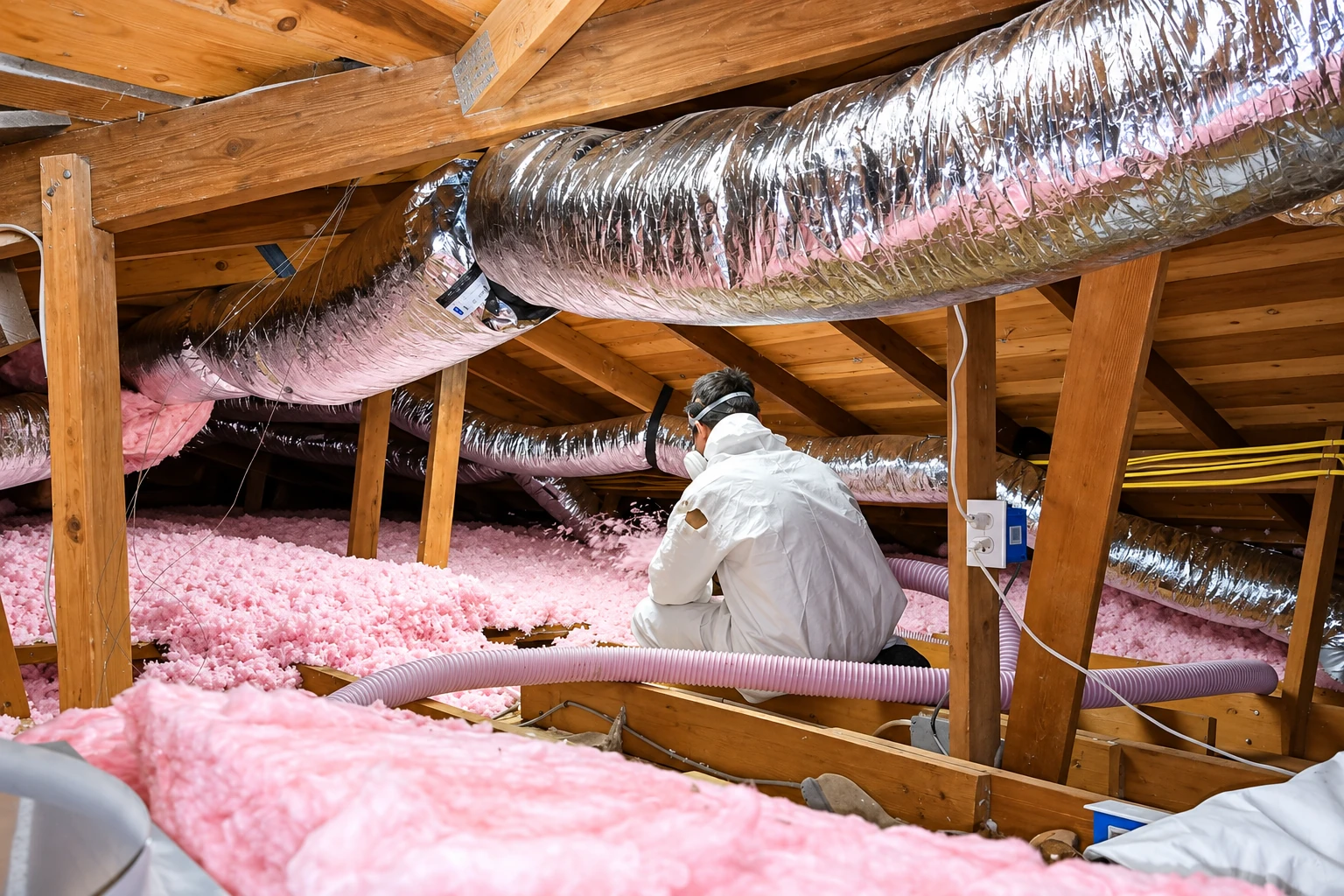
Most homes, I start in the attic, because that's where a quick look tells you the most about the whole house. From there we work out which parts are worth doing now and which can wait. Once anything that has to come first is sorted out, our crew seals the gaps around lights, pipes, wires and the attic hatch, keeps the eave vents clear so the attic can still breathe, and spreads the insulation evenly out to the edges, where it usually ends up thin.
When the old insulation is wet, moldy or full of droppings, more on top just buries the problem, so insulation removal comes first. If the complaint is cold floors, the fix is usually under the house with crawl space insulation.
Sealing plus blown-in
Blown-in is loose fill blown through a hose, so it settles around framing and wires without tearing anything up. With the gaps sealed first, it's the right call for most attics we see.
Spray foam
Foam costs more, but it seals air while it insulates, so it earns its price when your ductwork runs through the attic or a space needs a tight seal. We'll tell you the re-entry time, how long before you can come back inside, before we start.
How do you know your house needs more insulation?
One room won't warm up
One bedroom stays cold while the rest of the house is fine. Usually the ceiling or a wall there is thin or leaking air, and the furnace runs longer to make up for it.
Hot upstairs in summer
The upstairs or the room over the garage gets hot by afternoon. Heat from the attic is coming straight through the ceiling, and the AC pays for it all summer.
Cold floors in winter
Floors feel cold under bare feet, especially over the crawl space. The underside of the floor is usually bare or the insulation has sagged loose, so cold air keeps pulling heat away.
A bill that keeps climbing
The bill keeps going up though nothing about how you live has changed. Attic air leaks and thin insulation are the usual reasons, and you pay for them every month.
What happens when you call about insulating your Fernley home?
Call, and I come out
I come out myself, look at the attic, walls or crawl space and tell you what I see on the spot. Your written estimate says what comes first and what can wait.
Our installers do the work
If the job needs a permit, we pull it and line up the inspections with the city or county office for your address. Our installers fix the problems first, then insulate.
I check it before we're done
Once the installers wrap up, I check the job myself before we call it finished. Our work is satisfaction guaranteed.
Home insulation questions we hear
These are the questions Fernley homeowners ask before they call. If yours isn't here, ask me when I'm out looking at your attic.
How do I know if my attic needs more insulation?
You probably need more if the insulation sits at or below the tops of the floor joists in your attic. That's ENERGY STAR's quick check, and you can do it from the hatch with a flashlight. Note how many inches you see and tell us when you call.
Is blown-in or batt insulation better for an attic?
For most attics, blown-in loose fill is the better pick, because it usually costs less than batts and covers better around framing and wires. That's general guidance from an older Department of Energy fact sheet, and installation costs vary from job to job. Batts, the pre-cut pieces sold in rolls, are still the most common type in US homes.
How much does home insulation cost in Fernley?
There's no honest number until I've seen the house, because the cost comes down to which spaces need work and what's in them now. Foam runs higher than sealing and topping up with blown-in, and taking out old, wet material adds to the job. Your on-site estimate gives you the figure.
What should happen before new insulation goes in?
The attic's holes and gaps should be sealed, and any wet insulation, rotted or moldy framing or missing ventilation fixed, before new insulation goes down. That's ENERGY STAR's advice, and wet insulation usually means a roof leak to repair first. If a contractor won't agree to seal before insulating, ENERGY STAR says to call another one.
Is old attic insulation dangerous to work around?
It can be, so a few things get checked before anyone works up there. Gray, pea-size flakes may be vermiculite, which can contain asbestos, and ENERGY STAR says to leave it alone until an approved lab tests it, and your local health department can name one. Knob and tube wiring from before 1930 can be a fire hazard against insulation, and gas or oil appliances may need their venting tested, since sealing can sometimes push exhaust back into the house.
Who issues building permits for insulation work in Fernley?
The City of Fernley's Building Department and Code Enforcement issues building permits there. Its list covers construction, remodels and code compliance without naming insulation by itself, so ask the department about your job at 775-784-9900. If you're thinking of doing it yourself, the Nevada State Contractors Board lists an exemption for owners working on a home they live in, with conditions and an application.
Get a straight answer on your insulation
Tell us what you've noticed, what you saw in the attic and whether you have gas or oil appliances. Expect a reply within 1 business day, then I come out for a free on-site estimate with no obligation.
Insulation work, up close
Work that often goes with it
Insulation removal
If what's up there now got soaked by a roof leak or rodents moved in, it has to come out before new insulation does any good.
Learn moreCrawl space insulation
When the living room floor is cold all winter and the attic checks out fine, the heat is usually leaving through the floor into the crawl space below.
Learn more