Attic air sealing in Fernley NV - gaps closed before the insulation goes on
Drafty rooms, a hot upstairs or dusty ceiling lights usually mean air is leaking through the attic floor. We find the gaps and close them.
Get your attic gaps looked at
Call (775) 980-1020 or use the form, and tell us where your attic hatch is and which appliances run on gas so I come out ready.
What does attic air sealing do for a Fernley home?
Attic air sealing in Fernley closes the gaps in your ceiling that lead into the attic, so the air you paid to heat or cool stays in the house and hot, dusty attic air stays out.
Most calls I get start with a drafty house, and the insulation up there often looks fine from the hatch, because the trouble is usually underneath it in gaps nobody sealed. What moves the price and the schedule is how many gaps there are, how easy the attic is to work in, whether anything has to be fixed or pulled out first and whether you're adding attic insulation right after, so your estimate is where you get the figure for your attic. We're based in Fernley and work in Silver Springs, Sparks, Reno, Fallon, Dayton and the cities around them.
Why Fernley homeowners call M&T Fernley Spray Foam Insulation for attic air sealing
I look first, I check last
I come out to look at your attic and write the estimate, and I check our installers' work before we call it finished. You deal with the same person at the start and the end.
Roofer first, insulation since 2017
I spent years on roofing crews and kept seeing open gaps in the attics below, so I started this business in 2017. We're licensed and insured, and those gaps are the first thing I look for.
Permits pulled with your local office
When your job needs a permit, we pull it and line up the inspections with the city or county office that covers your address. That's one less thing for you to sort out.
On an attic, the order is what saves you money, sealing first and covering second. Call or send us a note and I'll come take a look.
How we do attic air sealing
We look hardest at the tops of walls, over dropped ceilings and behind kneewalls, the short walls along the sides of an attic room, because that's where the biggest holes tend to be. Our installers close those first, then work down to the smaller gaps around pipes, wires and the hatch. Around flues and chimneys we use sheet metal and heat-rated caulk instead of foam, since those get hot. For insulation-contact rated recessed lights, federal guidance is a bead of caulk where the fixture meets the ceiling and a sealed cover over it from the attic side. We keep the eave vents clear so the attic still breathes, and all of it gets done before any new insulation goes down, because once the gaps are buried nobody can reach them.
Sealing is often only part of the fix. If what's up there is thin or packed down, retrofit insulation tops it up once the gaps are closed. If your ductwork runs through the attic, spray foam insulation at the roofline seals and insulates in one pass, and that's the case where the extra cost makes sense. For most attics, sealing the gaps and adding loose fill is the better buy.
Sealing only
Suits an attic that already has a good depth of dry, clean insulation. We pull it back where the gaps are, seal underneath and lay it back in place.
Sealing plus a top-up
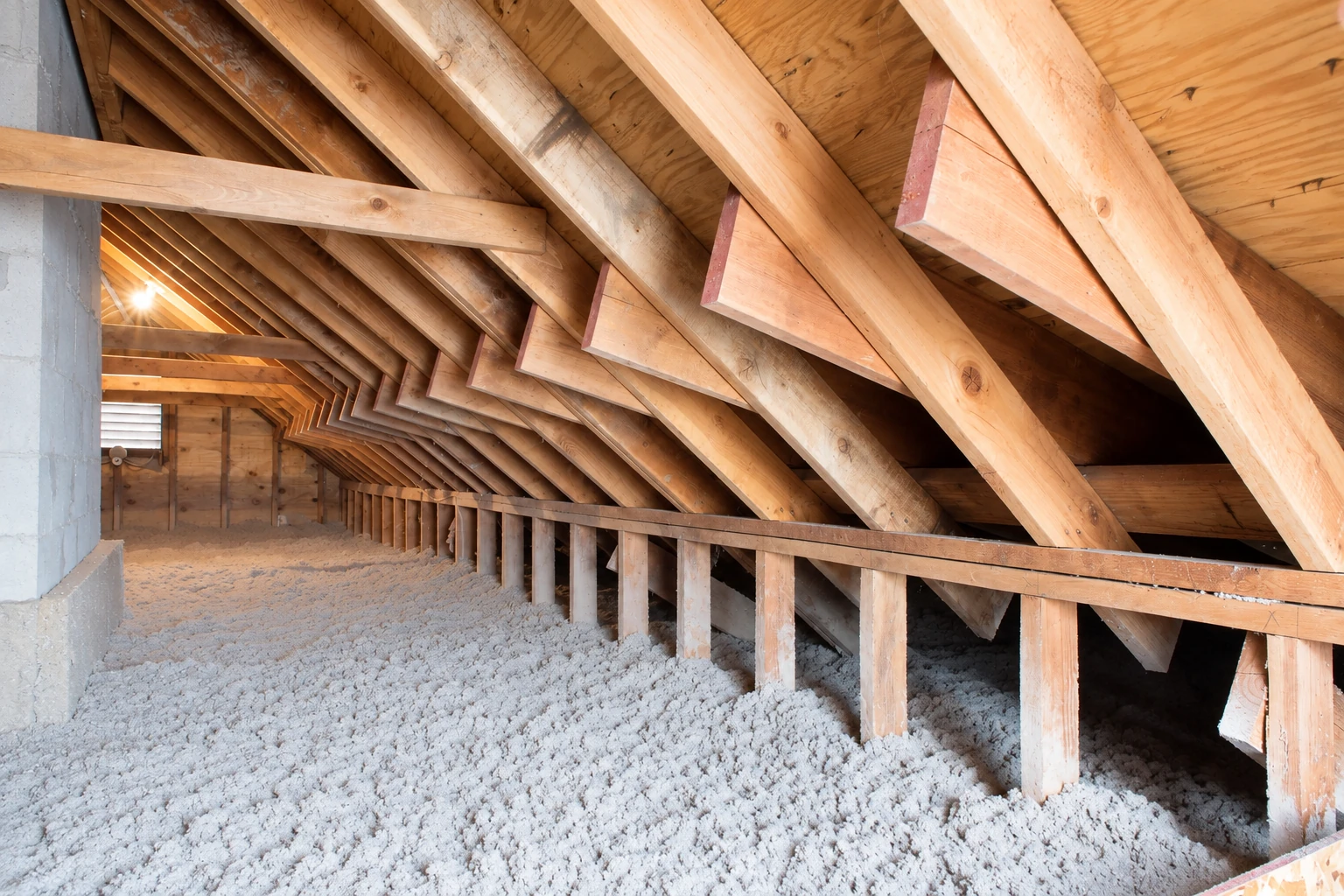
Suits most older attics where the insulation is thin or crushed. We seal first, then add blown-in insulation, loose fill sent up through a hose, and keep the depth even out to the edges.
Spray foam at the roofline
Suits attics with ductwork or a furnace up there, because foam brings that space inside the house. It costs more, so I only suggest it when the ducts make it worth it.
How can you tell your attic is leaking air?
Rooms that won't hold temperature
The upstairs or the room over the garage runs hotter or colder than the rest. House air is usually slipping into the attic, and your furnace or AC works harder every month it goes on.
Dark streaks in the insulation
Gray or black patches on the insulation mark spots where air has been moving through and leaving dust behind. Each one is an open gap, and piling more insulation on top won't stop it.
Dust rings around lights
A ring of dust on the ceiling around a light or a vent means attic air is coming down through that gap. Left alone, it keeps pulling dusty air into the room.
A power bill creeping up
Your bill climbs while your habits stay the same. Air leaks are a common reason, and every season you wait is another season paying to heat or cool the attic.
What happens after you call about your attic?
I look at your attic
I come out myself, look over the attic and tell you on the spot what I see. If there's gray, flaky vermiculite, it stays untouched until an approved lab tests it.
Repairs first, then the sealing
Your written estimate says what has to be fixed first and what can wait, and if the job needs a permit, we handle it. Our installers make those repairs, then seal the gaps.
I check it before we're done
I go over the sealing myself before any insulation covers it and before we call the job finished. That's the last chance to see those gaps, so it gets a careful look.
Attic air sealing questions
These are the questions Fernley homeowners ask me most about sealing an attic. If yours isn't here, give us a call and ask about your own house.
What does attic air sealing fix in my house?
It stops air from moving between your rooms and the attic through gaps in the ceiling, like the openings around pipes, wires, lights, flues and the hatch. You end up with fewer drafts, less dust coming down and an upstairs that's easier to keep comfortable.
Is attic air sealing safe if I have a gas furnace or water heater?
Yes, when the venting gets checked as part of the plan. A tighter house can let carbon monoxide build up if a gas furnace, water heater or dryer isn't venting properly, so the ENERGY STAR guide has a heating and cooling technician check it. It's also fair to ask whether the crew runs a combustion appliance safety inspection, a test that makes sure those appliances still vent safely once the house is tighter.
How long does attic air sealing take?
ENERGY STAR says sealing and adding insulation can usually be done in a day or two when the attic is easy to get into and move around in. A cramped attic or repairs that have to come first can stretch that out.
How much does attic air sealing cost in Fernley?
The price comes down to how many gaps your attic has, how big they are and how hard the attic is to work in. Old insulation that has to come out, repairs found first and a top-up added after all raise it, while a roomy attic with sound insulation keeps it lower. The estimate gives you the figure for your house.
Who do I call about permits for attic work in Fernley?
The City of Fernley's Building Division answers questions on permits, inspections and code, at 775-784-9900 or building@cityoffernley.org. If you apply as the owner, you fill out owner-builder forms, and a licensed contractor who applies needs a City of Fernley Business License. If your job needs a permit, we take care of it.
What should I fix in my attic before air sealing?
Damp insulation, moldy or rotted rafters and vents that blow moist air into the attic should be fixed before any sealing. Sealing over a wet spot just traps the problem, so those repairs go first.
Get a free look at your attic
Tell us where your attic hatch is and which appliances run on gas, and we'll reply within one business day to set a time for me to come look. The estimate is free, and there's no obligation.
Attic air sealing at work
Work that often goes with it
Retrofit insulation
Once the gaps are sealed, an older house with thin, packed-down insulation often needs more on top to keep the upstairs comfortable through the year.
Learn moreSpray foam insulation
If your furnace or ducts sit in the attic, foam at the roofline can seal and insulate that whole space in one pass instead of two.
Learn more