
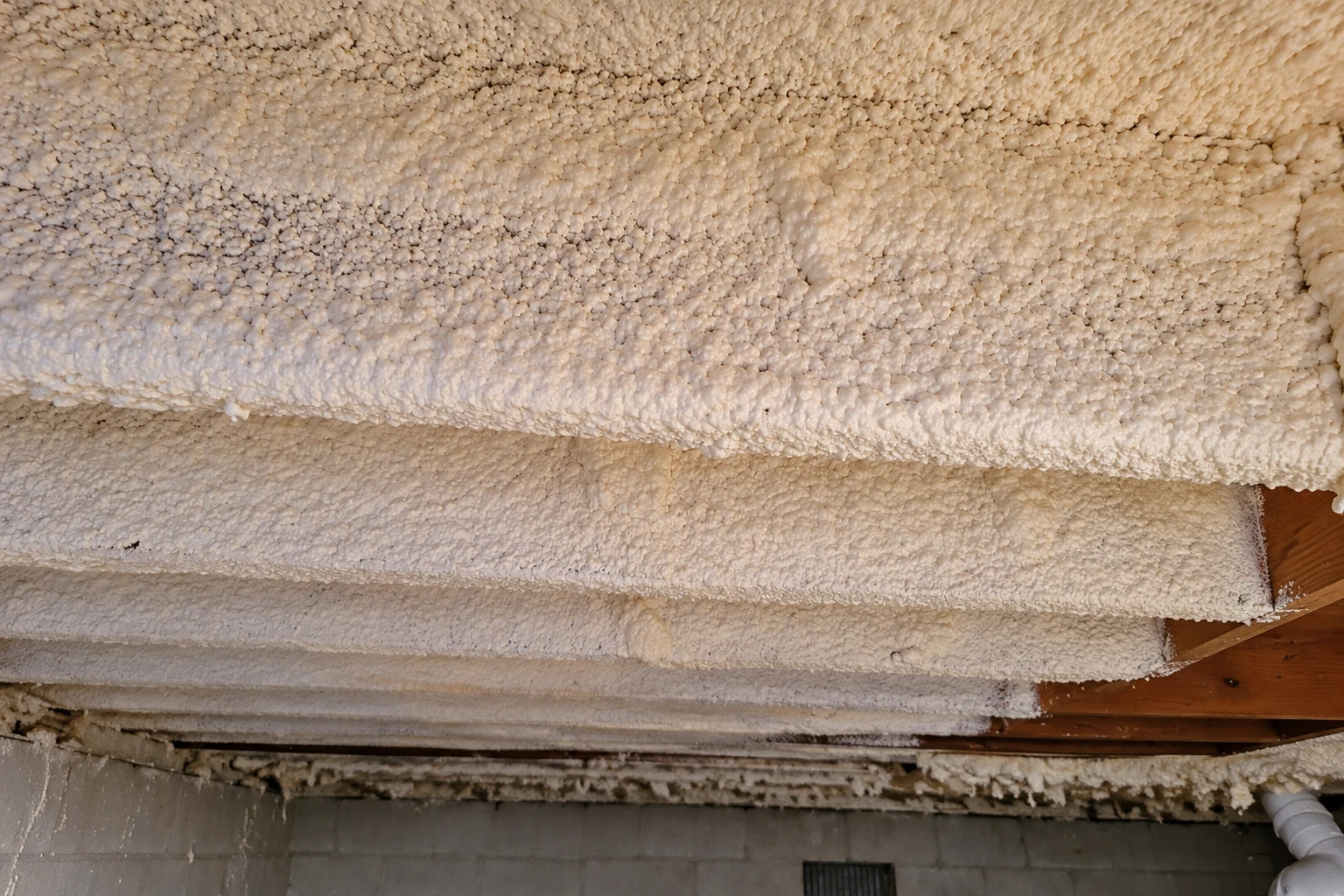
Basement insulation in Fernley NV - foundation walls that stay dry and warm
Cold basement, damp smell or a power bill that climbs? We deal with water first, then insulate the walls so the room holds heat.
Get your basement walls looked at first
Whether your walls take on water decides the material and the order of the work, so call (775) 980-1020 or use the form to have them checked.
What does it take to insulate a basement in Fernley?
Basement insulation in Fernley means covering the inside of your foundation walls with rigid foam panels or spray foam, so the room downstairs holds heat and the walls stay dry instead of damp. Spray foam also seals air as it goes, which stops the drafts that sneak in along the top of the wall.
Most basement calls start with a cold room downstairs, chilly floors above it or a power bill that jumps every winter. The price turns on how many square feet of wall you have, which material suits it, whether water has to be dealt with first and how the foam gets covered, and the schedule mostly turns on whether there's water work to do before we start. If the cold floors sit over a crawl space instead, that's crawl space insulation, a different job. Your estimate lays out what your own walls need and in what order.
Why Fernley homeowners call M&T Fernley Spray Foam Insulation for basements
The owner sees your walls first
I come out myself to look at your basement and write the estimate, and I check our installers' work before it's done. You deal with one person who's seen your walls.
In business since 2017
We've been at this since 2017, and before that I spent years on roofing crews finding thin, crushed insulation. I'd rather tell you a basement can wait than sell you a job it doesn't need.
Licensed and insured for every job
We're licensed and insured. A licensed contractor who applies for a Fernley permit also has to hold a City of Fernley Business License, so it's worth asking every bidder.
Before you pick a material, have someone check the walls for water. Set up a visit or call (775) 980-1020.
How we handle basement insulation
We start by checking your walls for water, because a wall with signs of seepage gets dealt with before any insulation goes up. Once the wall is dry, our crew cleans it and puts up rigid foam panels or spray foam on the inside of the foundation. Spray foam has to be covered with ignition-barrier paint, a coating that slows fire, or with drywall, and on a foam job that covering is part of the price we quote, so check that every bid you get includes it. Then we clean up and walk the finished wall with you.
Ask whether the rim joist, the wood band sitting on top of the foundation wall, is in the plan, since guidance says it should be insulated when it's part of the line between your heated space and outside. If you're leaning toward foam, closed-cell foam insulation is the dense kind that blocks moisture, and open-cell foam insulation is the lighter kind more often used above ground.
Rigid foam panels
Panels suit a flat, dry wall you plan to frame and finish, and they're usually the lower-cost route. The work is in the prep, because they only hold up against moisture when they're stuck down with no air gaps and every seam is sealed.
Closed-cell spray foam
Dense foam that fills every dip in a block or poured wall and seals air while it insulates. It costs more than panels, and it's what we reach for when a wall is too rough for panels to sit flat.
Open-cell spray foam
Lighter foam that seals air just as well but has to go on thicker to hold back moisture. That makes it a narrower fit in a basement, so closed-cell is usually the better call below ground.
How can you tell your basement needs insulation?
Chilly room downstairs
The basement stays cold even with the heat on, and the floor above feels it. That usually means bare foundation walls pulling heat out, and you pay for it every winter you wait.
Musty smell or damp air
A musty smell usually means moisture is getting through the wall. Covering it with insulation traps it, so finding the source first keeps a small fix from turning into a moldy one.
White crust on concrete
White powder or water lines on the foundation show water has been moving through it. That's worth a look before you insulate, because it tends to spread while water keeps coming in.
Sagging, stained wall batts
Old fiberglass on the walls that sags, stains or smells damp has usually soaked up moisture. Left up, it holds water against the concrete and does little to keep the heat in.
What happens after you call about your basement?
Call for an on-site look
I come out myself, look at your walls and tell you on the spot what I see. Your written estimate says what to fix first and what can wait.
Our installers do the work
Once any water work in the plan is done, our own installers put up the panels or foam and the covering that goes over it.
I check before we finish
Before we call it finished, I go over the job myself, looking at coverage, seams and edges. You see the finished wall with me and get your questions answered then.
Basement insulation questions
These are the questions we hear about insulating basement walls. If yours isn't here, call (775) 980-1020 and ask about your own basement.
How much does basement insulation cost in Fernley?
Insulating a basement across the US usually costs about $4.50 to $6.40 per square foot, and that's the national market range, not our price. Panels usually land lower than closed-cell foam, and any water work comes on top, so your estimate is where your own figure comes from.
Do leaks have to be fixed before insulating a basement?
Yes, and getting water directed away from the foundation walls can be part of that, so your plan and budget may include outside water work before any insulation goes up. Insulation on a wall that's still taking water just keeps it damp.
What is the best insulation for basement walls?
Closed-cell spray foam gives the best moisture control of the choices for the inside of a basement wall, so it's the one for a wall that has to stay dry. It costs more than rigid panels, so on a flat, dry wall, panels sealed tight can be the better buy.
Is fiberglass insulation okay on basement walls?
Usually not, because fiberglass or cellulose against a basement wall can soak up a lot of moisture and stay damp. If a bid uses batts, blown cellulose or mineral wool there, ask how it keeps a Class I vapor retarder, a sheet that stops vapor almost completely, off the room side.
How long does basement insulation take?
The insulating itself is usually the shorter part of the job, and what stretches the schedule is water work that has to happen first. A foam job also has its covering to go on, so I'll tell you at the estimate what comes first and how the work lines up.
Who issues permits for basement insulation in Fernley?
The City of Fernley issues building permits for construction, remodels and code compliance, and its online permit center is where you ask whether your basement job needs one. When a job needs a permit, we pull it and line up the inspections, and new permits have to meet the codes the city currently has adopted, energy code included. If you'd rather pull it yourself, the city has owner-builder forms, and in Reno, Sparks and the other cities we work in, it's the city or county office for your address.
A free look at your basement walls
Put your basement wall area in square feet and any signs of water you've noticed in the form, and we'll reply within one business day. I come out for a free on-site estimate, with no obligation.
Examples of basement insulation
Related foam services
Closed-cell foam insulation
A dense foam that blocks moisture while it insulates, worth reading up on if a below-grade wall has to stay dry or you're comparing foam bids.
Learn moreOpen-cell foam insulation
A lighter foam that seals air well and usually costs less, often the better fit for walls and ceilings above ground than for a damp basement.
Learn more